[1] IPCC. (2023). AR6 Synthesis Report: Climate Change 2023. https://www.ipcc.ch/report/sixth-assessment-report-cycle/
[2] Lawrance, E. L., et al. (2022). The
Impact of Climate Change on Mental Health and Emotional Wellbeing: A Narrative Review of Current Evidence, and its Implications. International Review of Psychiatry, 34(5), 443–498. https://doi.org/10.1080/09540261.2022.2128725
[3] Rocque, R. J., et al. (2021). Health effects of climate change: An overview of systematic reviews. BMJ Open, 11(6), e046333. https://doi.org/10.1136/bmjopen-2020-046333
[4] Whitmarsh, L., et al. (2022). Climate anxiety: What predicts it and how is it related to climate action? Journal of Environmental Psychology, 83, 101866. https://doi.org/10.1016/j.jenvp.2022.101866
[5] Brosch, T. (2025). From individual to collective climate emotions and actions: A review. Current Opinion in Behavioral Sciences, 61, 101466. https://doi.org/10.1016/j.cobeha.2024.101466
[6] Doran, R., et al. (2022). When and why do people
experience flight shame? Annals of Tourism Research, 92, 103254. https://doi.org/10.1016/j.annals.2021.103254
[7] Whitmarsh, L. , and Hampton, S. (2024). Are radical changes to lifestyles necessary for mitigating climate change? Dialogues on Climate Change, 29768659241293215. https://doi.org/10.1177/29768659241293215
[8] Hakim, N., et al. (2021). Group-Based Emotions and Support for Reparations: A Meta-analysis. Affective Science, 2(4), 363–378. https://doi.org/10.1007/s42761-021-00055-9
[9] Mallett, R. K., et al. (2021). Guilt and Environmental Behavior. In F. Maggino (Ed.), Encyclopedia of Quality of Life and Well-Being Research (pp. 1–5). Springer International Publishing. https://doi.org/10.1007/978-3-319-69909-7_3962-2
[10] Nielsen, R. S., and Gamborg, C. (2024). The Moral Potential of Eco-Guilt and Eco-Shame:
Emotions that Hinder or Facilitate Pro-Environmental Change? Journal of Agricultural and Environmental Ethics, 37(4), 17. https://doi.org/10.1007/s10806-024-09938-w
[11] Ferguson, M. A., and Branscombe, N. R. (2010). Collective guilt mediates the effect of beliefs about global warming on willingness to engage in mitigation behavior. Journal of Environmental Psychology, 30(2), 135–142. https://doi.org/10.1016/j.jenvp.2009.11.010
[12] Shipley, N. J., and van Riper, C. J. (2022). Pride and guilt predict pro-environmental behavior: A meta-analysis of correlational and experimental evidence. Journal of Environmental Psychology, 79, 101753. https://doi.org/10.1016/j.jenvp.2021.101753
[13] Baumgartner, T., et al. (2021). Feeling of guilt
explains why people react differently to resource depletion warnings. Scientific Reports, 11(1), 11988. https://doi.org/10.1038/s41598-021-91472-0
[14] Lu, H., and Schuldt, J. P. (2015). Exploring the role of incidental emotions in support for
climate change policy. Climatic Change, 131(4), 719–726. https://doi.org/10.1007/s10584-015-1443-x
[15] Nielsen, R. S., et al. (2024). Eco-guilt and eco-shame in everyday
life: An exploratory study of the experiences, triggers, and reactions. Frontiers in Sustainability, 5. https://doi.org/10.3389/frsus.2024.1357656
[16] Yan, Z., Arpan, L. M., and Clayton, R. B. (2024). Assessing the Role of Self-Efficacy in Reducing Psychological Reactance to Guilt Appeals Promoting Sustainable Behaviors. Sustainability, 16(17), Article 17. https://doi.org/10.3390/su16177777
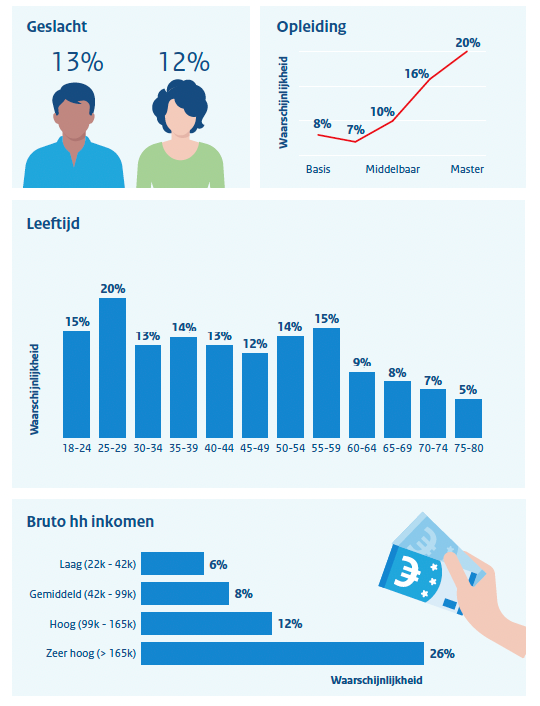
[17] Zijlstra, T., and Jonkeren, O. (2024). De Vliegende Hollander 2024 (pp. 1–15).
Kennisinstituut voor Mobiliteitsbeleid. https://www.kimnet.nl/binaries/kimnet/documenten/publicaties/2024/12/12/de-vliegende-hollander-2024/KiM+factsheet+De+vliegende+Hollander+2024_defDT.pdf
[18] IEA. (2023). The world’s top 1% of emitters produce over 1000 times more CO2 than the
bottom 1%. https://www.iea.org/commentaries/the-world-s-top-1-of-emitters-produce-over-1000-times-more-co2-than-the-bottom-1
[19] IEA. (2022). World Energy Outlook 2022. IEA. https://www.iea.org/reports/world-energy-
outlook-2022/an-updated-roadmap-to-net-zero-emissions-by-2050
[20] Moorcroft, H., et al. (2024). Climate Change and Wealth:
Understanding and Improving the Carbon Capability of the Wealthiest People in the UK. Available at SSRN 4723179. https://papers.ssrn.com/sol3/papers.cfm?abstract_id=4723179
[21] Nielsen, K. S., et al. (2021). The role of high-socioeconomic-status people in locking in or rapidly reducing energy-driven greenhouse gas emissions. Nature Energy, 6(11), 1011–1016. https://doi.org/10.1038/s41560-021-00900-y
[22] Hampton, S., and Whitmarsh, L. (2023). Choices for climate action: A review of the multiple roles individuals play. One Earth, 6(9), 1157–1172. https://doi.org/10.1016/j.oneear.2023.08.006
[23] Sparkman, G., et al. (2021). How social norms are often a barrier to
addressing climate change but can be part of the solution. Behavioural Public Policy, 5(4), 528–555. https://doi.org/10.1017/bpp.2020.42
[24] Bouman, T., et al. (2025). Local fossil fuel ad ban as a catalyst for global change. Nature Climate Change, 1–3. https://doi.org/10.1038/s41558-025-02267-4
[25] Ardoin, N. M., and Bowers, A. W. (2025). Collective action impacts on climate change mitigation. Current Opinion in Behavioral Sciences, 63, 101503. https://doi.org/10.1016/j.cobeha.2025.101503
[26] Albarracín, et al. (2024). Determinants of behaviour and their efficacy as targets of behavioural change interventions. Nature Reviews Psychology, 3(6), 377–392. https://doi.org/10.1038/s44159-024-00305-0
[27] Oerlemans, A. (2024, December 16). Hoe Den Haag als eerste stad ter wereld fossiele reclame verbiedt. Change Inc. https://www.change.inc/future-leadership/hoe-den-haag-de-eerste-stad-ter-wereld-werd-die-fossiele-reclame-gaat-verbieden-41408
[28] Sparkman, G., et al. (2021). How social norms are often a barrier to
addressing climate change but can be part of the solution. Behavioural Public Policy, 5(4), 528–555. https://doi.org/10.1017/bpp.2020.42
[29] Jong, R. de. (2023, November 29). Terugblik klimaatbijeenkomst: Mensen in beweging krijgen voor duurzamer gedrag. https://www.communicatiekring.nl/k/n119/news/view/7344/1602/terugblik-klimaatbijeenkomst-mensen-in-beweging-krijgen-voor-duurzamer-gedrag.html
[30] Bissing-Olson, M. J., et al. (2016). Experiences of pride, not guilt, predict pro-environmental behavior when pro-environmental descriptive norms are more positive. Journal of Environmental Psychology, 45, 145–153. https://doi.org/10.1016/j.jenvp.2016.01.001
©De tekst is beschikbaar onder de licentie Creative Commons
Naamsvermelding-NietCommercieel-GelijkDelen 4.0 Internationaal, er kunnen aanvullende voorwaarden van
toepassing zijn. Zie de gebruiksvoorwaarden voor meer informatie.